
November 15, 2025 Market Update
Market Recap. Moody Markets
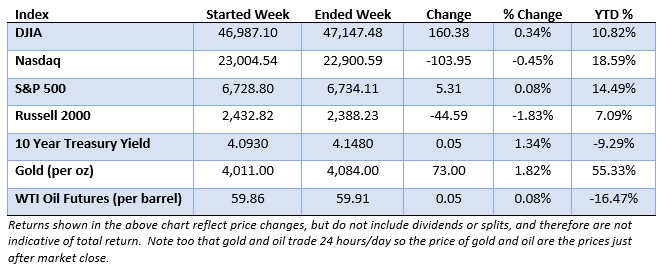
Concerns over tech earnings, valuations and the economy were temporarily set aside at the start of last week, and stocks surged on news that the government shutdown was about to end. The Dow industrials closed above 48,000 on Wednesday for the first time. The mood shifted dramatically later in the week after comments from Federal Reserve officials downplayed the likelihood of a quick rate cut, adding to questions about whether future corporate earnings will be strong enough to support the high multiples that have driven stocks higher.
In the bond market, Treasury yields moved higher as investors weighed lingering inflation pressures, a suggestion by Kevin Hassett, director of the National Economic Council, that we may never learn what October’s unemployment rate was, and growing rate-cut doubts driven by hawkish commentary from several Fed speakers. The shift signaled a more cautious tone in fixed income markets as the rate path became less clear.
The equity market’s volatility and the bond market’s more cautious tone are consistent with last week’s observation that market fragility is increasing. It seems Mr. Market is encouraged by the resolution in Washington but is more cautious about the outlook for the economy and corporate earnings. As a result, more volatility may be forthcoming.
Market Performance
Market Commentary: Love Me, Love Me Not
This past week offered another example of how fast and furious investor sentiment can swing when stocks are priced for perfection. After brushing aside several well-known risks early in the week, investors quickly shifted their attention back to them. Concerns about high valuations, sticky inflation, a softening jobs market, etc. all resurfaced as the week progressed, prompting some investors to cash in on recent gains.
The sudden shift in direction is a reminder that when stock prices are high and market conditions are fragile, even routine comments from policymakers or modest moves in interest rates can be enough to reset expectations. For long-term investors, riding out this kind of volatility is part of the deal.
Now that government offices have reopened, a backlog of economic data is about to hit the tape, including reports on employment, inflation and consumer spending that were delayed during the closure. That flood of information could reintroduce volatility as investors recalibrate expectations for growth, inflation, and interest rates.
In Case You Missed It
Warren Buffett will be stepping down as CEO of Berkshire Hathaway at the end of this year, concluding a remarkable six-decade tenure. When he took control of the company in 1965, Berkshire’s market value was about $19 million; today it stands near $1 trillion.