October 31, 2026, Market Update
Market Recap: Show Me The Money
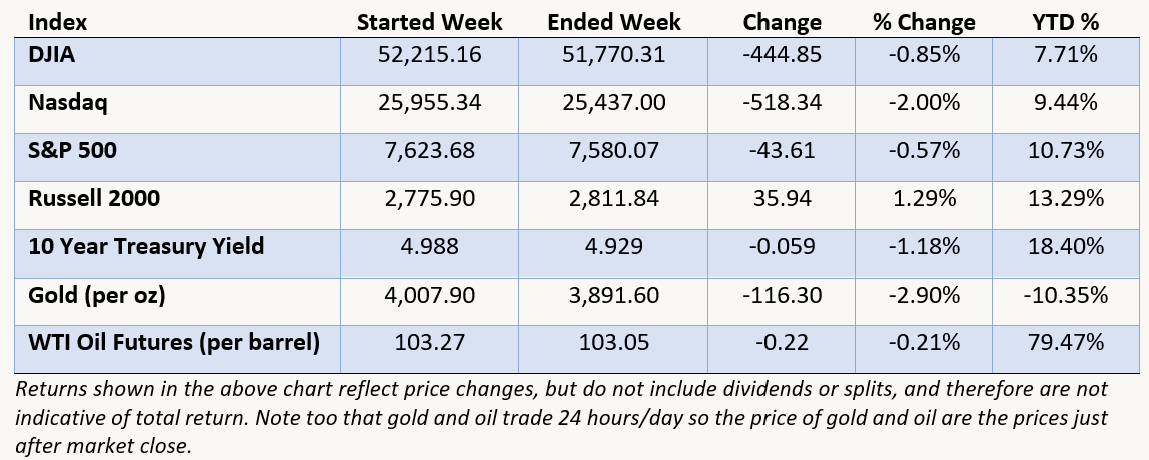
U.S. stocks finished the week lower this week, as Mr. Market’s concerns about the enormous sums being spent on artificial intelligence grew. Tech giants like Alphabet, Amazon, Meta, and Microsoft disclosed stunningly high capital expenditures for the third quarter that are on track to reach hundreds of billions of dollars. Alphabet Inc. (Google) saw its shares fall about 13% for the week, including a 12.6% plunge on Thursday that erased roughly $500 billion in market value, notwithstanding revenue growth in the third quarter.
Treasury bonds posted modest gains as investors rotated toward safe havens. The 10-year Treasury yield fell below 5%, as buying momentum accelerated into Friday's closing bell. The policy-sensitive 2-year Treasury yield dropped by 10 basis points (0.10 percentage points) for the week, finishing at 4.596%. This marked the largest one-week yield decline for the 2-year note since May.
On a more positive note, the economy continues to demonstrate surprising strength. Thursday's report showed GDP growing at a 3.4% annual rate during the third quarter, helped by strong consumer spending and business investment. At the same time, the Fed's preferred inflation measure rose by 3.6% compared to a year ago, reinforcing concerns that inflation may lead to further rate hikes in the months to come.
Market Performance
Market Commentary: Remedy Worse Than The Disease?
The Federal Reserve left interest rates unchanged on Wednesday, despite inflation remaining stubbornly above its 2% target. Two Fed officials favored raising rates immediately, and financial markets continue to anticipate another increase in the months ahead. The bond market, however, appears somewhat less convinced that another hike is inevitable.
The Fed has good reason to remain concerned about inflation. Higher interest rates discourage borrowing and spending, which can reduce demand and ultimately help bring prices under control. Unfortunately, the medicine used to treat inflation comes with some unpleasant side effects.
Higher rates make mortgages and car loans more expensive and increase the cost of carrying credit card debt, hitting middle-class households particularly hard. They also raise borrowing costs for small businesses and start-ups, making it more difficult for them to expand, hire employees, or sometimes even stay afloat.
That leaves the Fed walking an increasingly narrow path. Raise rates too little and inflation could remain entrenched; raise them too much and the cure could inflict considerable damage on its own. Whether another rate increase is coming remains to be seen, but this much is clear; the consequences will extend well beyond Wall Street.
In Case You Missed It: A Hacking Horror Story
Talk about a Halloween nightmare. Cryptocurrency giant Binance said on Thursday that hackers made off with approximately $6.3 billion from cryptocurrency exchange Binance in about 20 minutes, in what is believed to be the largest crypto heist on record.
Just For Fun: We are the Champions My Friend!
After 69 years, Milwaukee is once again the home of the world baseball champions. Repeatedly coming from behind, the Brewers were 11-2 in the playoffs, never allowed more than four runs in any of their 13 postseason games, ace pitcher Jacob Misiorowski went 2-0 with a 1.89 ERA, and the bullpen posted a remarkable 1.38 ERA. It was, in short, one of the most dominant playoff performances in modern baseball history.