
Financial Markets & Economic News
Despite renewed conflict in the Middle East, higher interest rates, and lingering inflation concerns, U.S. stocks have delivered stronger-than-expected returns so far in 2026.
Big tech companies kicked things off with strong earnings, pushing major indexes to new highs early in the year, following a rebound after the initial shock of the war with Iran faded. By spring, smaller companies began to participate in the rally as investors were attracted to their more favorable valuations and improving growth prospects.
The economy has also helped keep things steady. Job growth and consumer spending have remained solid, while strong company profits have helped maintain investor confidence despite worsening global tensions and energy price spikes. Inflation, however, remains elevated and continues to complicate the outlook for interest rates.
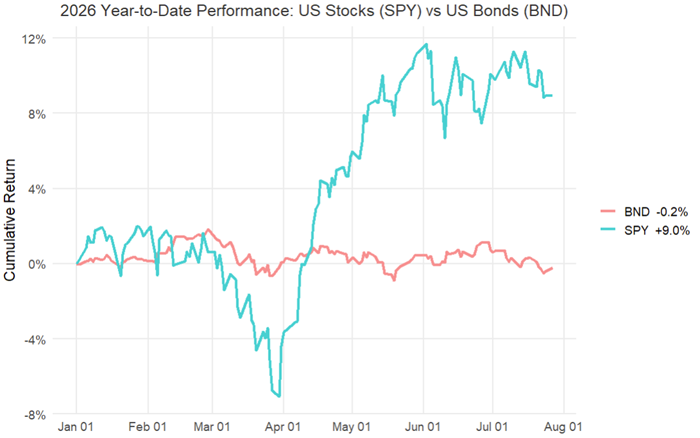
Strong corporate earnings continued to support domestic stocks. While the technology sector is still a leader, small cap stocks have been the surprise standout. Through July 27, the S&P 500 was up about 8% for the year, although it was approximately 0.5% lower for the month.
The bond market ended the second quarter with a modest gain but has come under renewed pressure as longer-term interest rates have risen. Corporate and municipal bonds have generally held up well, while higher-yield bonds have experienced greater volatility.
The resumption of hostilities in the Middle East has rekindled inflation worries and sent the 10-year Treasury yield to its highest level since early 2025. Meanwhile the Federal Reserve has maintained an “extended pause” on rates, until inflation shows clearer and more durable progress. Many market observers now expect the Federal Reserve to raise rates at least once this year.
For a quick visual review of how stocks and bonds have fared recently, this chart summarizes the latest numbers for this year’s performance so far, based on a pair of exchange traded funds:
The renewed military conflict in the Middle East is a wildcard for the remainder of 2026. Continued hostilities could push oil prices higher, add to inflation, and create greater uncertainty for both stocks and bonds. Headlines regarding energy supplies, shipping routes, or escalating regional tensions have the potential to trigger increased day-to-day volatility in both markets.