
U.S. Markets & Economic News
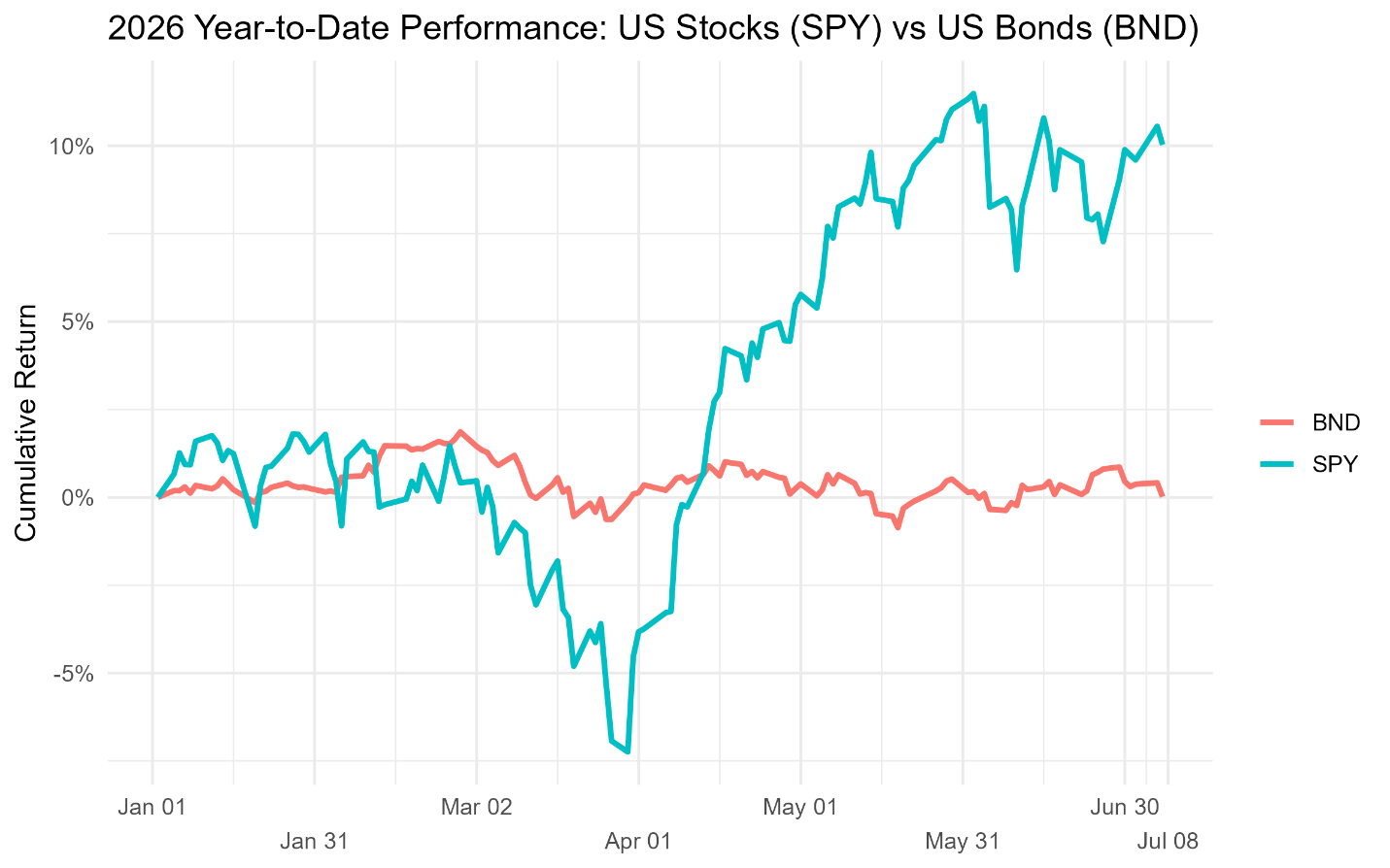
Despite renewed conflict in the Middle East, higher interest rates, and lingering inflation concerns, U.S. stocks have delivered stronger-than-expected returns through the first half of 2026. Big tech companies kicked things off with strong earnings, pushing major indexes to new highs early in the year, following a rebound after the initial shock of the war with Iran faded.
By spring, the rally started to spread beyond the usual tech giants. Smaller companies also began to participate in the rally as investors were attracted to their more attractive valuations and improving growth prospects.
The economy also helped keep things steady. Job growth stayed solid, consumer spending didn’t fall off a cliff, and inflation cooled enough to calm nerves. Even with global tensions and energy‑price spikes, the market held up better than many expected. Strong company profits played a significant role in keeping confidence high.
Earnings season kept the momentum going. Strong corporate earnings continued to support the rally, giving investors additional confidence in the economy and the markets. Tech was still a leader, but small‑cap stocks were the surprise standout.
The bond market in 2026 quietly did what investors hoped they would—provide attractive income while helping reduce overall portfolio volatility. After years of historically low yields, today's bond market once again offers meaningful income opportunities for long-term investors.
Corporate and municipal bonds generally performed well, while higher-yield bonds experienced greater volatility. Overall, bonds provided steady income and helped offset the day-to-day swings in the stock market.
For a quick visual review of how stocks and bonds have fared recently, these charts summarize the latest numbers for this year’s performance so far, based on a pair of exchange traded funds:
A wildcard for the rest of 2026 is the return of military strikes in the Middle East in recent days. Renewed conflict in that region tends to push oil prices higher, lift inflation, and make investors nervous, which could shake up both stocks and bonds in the second half of the year. Even if the U.S. economy stays solid, headlines about supply routes, energy risks, or rising tensions could create more day‑to‑day market swings.
Higher oil prices could increase costs for consumers and businesses, adding inflationary pressure and contributing to greater market volatility. While an economic downturn is far from certain, investors should be prepared for a bumpier ride during the second half of the year.
Overall, the first half of 2026 demonstrated the market's resilience. Despite geopolitical tensions, higher interest rates, and lingering inflation concerns, stocks continued to advance as market leadership broadened beyond the largest technology companies—setting up a cautiously optimistic outlook for the remainder of the year.